
Five universities in Ontario train neurologists and neurosurgeons, and choosing between them is less about prestige than about fit. Combined department or split divisions, big-city volume or small-program access, clinical track or research degree: the schools line up differently on each, and those differences are the whole story.
One note before you read on. We run this site independently and have no tie to any of these universities or hospitals. The cnsuwo.ca address used to belong to Western University’s Department of Clinical Neurological Sciences, and it has since changed hands. For anything official, go to the school’s own site. Our full disclaimer and contact details sit at the bottom of the page.
Compare Five Neuroscience Programs in Ontario
Five schools, four things that separate them: structure, location, size, and reputation. Start here, then read the profiles for the reasoning.
Program | City | How it is set up | Best known for |
|---|---|---|---|
Western University (CNS) | London | One combined department of neurology and neurosurgery | Stroke, complex epilepsy surgery, ALS and neuromuscular disease |
University of Toronto | Toronto | Neurology and neurosurgery split across faculties, centred on Krembil Brain Institute at Toronto Western | Scale and subspecialty depth, the largest neurology and neurosurgery training in the country |
McMaster University | Hamilton | Divisions of neurology and neurosurgery serving a large regional base | Stroke and endovascular care, MS and ALS clinics, self-directed learning |
University of Ottawa | Ottawa | Divisions tied to the Brain and Mind Research Institute, bilingual | Clinical and research overlap, functional neurosurgery, English and French training |
Queen’s University | Kingston | Smaller division, neurology and neurosurgery share an inpatient unit | Close teaching, high faculty-to-resident ratio, broad general exposure |
A Closer Look at Each Program
Now the detail behind each row, starting with Western.
Western University, London
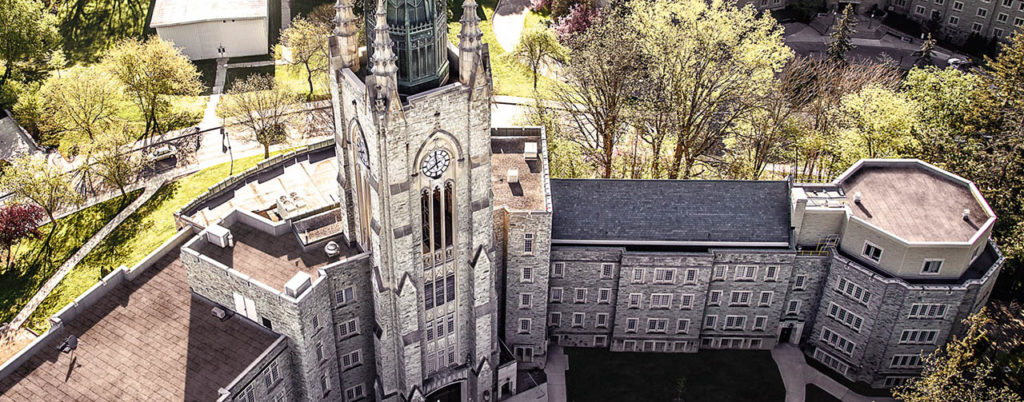
Western keeps neurology and neurosurgery under one roof, in a single Department of Clinical Neurological Sciences. That combined structure is uncommon in Canada, and it helps explain why London has such a long history in stroke research and in complex epilepsy surgery. The department goes back to 1969 and sits inside University Hospital, part of London Health Sciences Centre. A neurosurgeon, Dr. David Steven, currently chairs it. You will find residencies in both neurology and neurosurgery here, a broad set of clinical fellowships, and graduate research through the university’s neuroscience program. If your interest points toward stroke, epilepsy, ALS, or neuromuscular disease, this one belongs on your list.
University of Toronto
Toronto is the large one. Neurology sits within the Department of Medicine and neurosurgery within the Department of Surgery, and trainees move through several teaching hospitals across the city, among them St. Michael’s, Sunnybrook, and the University Health Network sites at Toronto Western and Toronto General. Its adult neurology residency is the largest in Canada, with roughly forty residents, and much of the neuroscience weight gathers at the Krembil Brain Institute at Toronto Western Hospital, one of the biggest neuroscience units in North America. A new surgical tower is going up there, due to open later this decade. The trade-off is the one you would expect at this scale: huge breadth and case volume, in a busy downtown setting where you are one learner among many.
McMaster University, Hamilton
McMaster has a character of its own. The medical school built its reputation on putting students in charge of their learning early, and the neurology division acts as the regional referral centre for roughly two and a half million people in south central Ontario. In practice that means a heavy stroke service, including endovascular clot retrieval, alongside large multiple sclerosis and ALS clinics. Clinical work is spread across Hamilton General, Juravinski, and St. Joseph’s, with paediatric cases at McMaster Children’s. It suits people who want volume and a hands-off teaching style that expects you to drive.
University of Ottawa
Ottawa’s real strength is how closely its clinical and research sides are stitched together. The neurology and neurosurgery divisions feed into the Brain and Mind Research Institute, launched in 2012 and now one of the largest such institutes in the country, with a sizeable neuroscience program at the Ottawa Hospital Research Institute working next to it. Two things set Ottawa apart. You can train in both English and French, which matters if you plan to practise in a bilingual setting. And there is genuine depth in functional neurosurgery and neuromodulation for people drawn to that work.
Queen’s University, Kingston
Queen’s is the smallest of the five, and it leans into that. In Kingston, neurology and neurosurgery share an inpatient unit with a ten-bed stroke service, and the division takes complex referrals from across southeastern Ontario. Residents usually get more direct time with faculty than they would at a bigger centre, and they see a wide range of general neurology rather than being funnelled into a narrow subspecialty early. Kingston is also a serious research option through its Centre for Neuroscience Studies, which by coincidence shares the CNS initials with Western’s department. If a collegial, close-knit program appeals to you more than sheer size, it is worth a trip.
What Each Program Is Known for in Research
Reputations in this field tend to cluster around a handful of conditions and techniques. Here is the rough shape of where each school puts its research energy. Treat it as a guide to strengths, not a full inventory.
Program | Where its research weight sits |
|---|---|
Western University | Stroke prevention with a long trial history, complex epilepsy and epilepsy surgery, ALS and motor neuron disease, frontotemporal dementia and cognition, neuromuscular disease |
University of Toronto | Neurodegeneration and Parkinson’s, deep brain stimulation and neuromodulation, epilepsy, cerebrovascular surgery, concussion, brain tumours, pain, vision science |
McMaster University | Stroke and endovascular therapy, multiple sclerosis, ALS, epilepsy, and a strong tradition in research methods and evidence-based neurology |
University of Ottawa | Parkinson’s and neurodegeneration, neuromodulation and functional neurosurgery, the heart and brain connection, neuromuscular disease, imaging |
Queen’s University | Interdisciplinary neuroscience across fourteen departments, with themes in pain and addiction, mood and anxiety, healthy development and aging, and motor research |
Fellowships and Subspecialty Training
Fellowships are where you specialise after residency. The menu at each school follows its clinical strengths, so this is a useful lens if you already know the area you want.
Western University
Adult fellowships run across most subspecialties: stroke and cerebrovascular disease, including the Charles Drake fellowship in neurovascular therapy, along with epilepsy and EEG, epilepsy surgery, neuromuscular medicine and EMG, movement disorders, cognitive neurology, headache, multiple sclerosis, neurocritical care, autoimmune neurology, and stereotactic and functional neurosurgery.
University of Toronto
Because the program is so large, the fellowship list is wide. On the neurology side that includes stroke and vascular neurology, movement disorders and deep brain stimulation, epilepsy, cognitive and behavioural neurology, neuromuscular disease, and an interdisciplinary Brain Medicine fellowship. On the surgical side, Toronto Western runs high-volume fellowships in cerebrovascular, functional, epilepsy, oncology, and spine surgery. UHN describes its clinical fellowship program as the largest in Canada.
McMaster, Ottawa and Queen’s
McMaster concentrates its fellowships on the division’s core: epilepsy, stroke, neuromuscular disorders, and interventional neuroradiology, with a surgeon-scientist route on the neurosurgery side. Ottawa runs subspecialty training through The Ottawa Hospital, with particular depth in functional neurosurgery and neuromodulation, and some of it available in French. Queen’s offers fewer stand-alone clinical fellowships than the larger centres. Its distinctive strength is graduate research: the Centre for Neuroscience Studies runs multidisciplinary master’s and doctoral programs and a combined MD and PhD route, drawing supervisors from fourteen departments across three faculties.
How People Get In
There are three common routes into this field, and they work differently.
Residency
Neurology and neurosurgery are entry-level specialties in Canada, so medical students apply straight out of an MD through the Canadian Resident Matching Service, known as CaRMS. Both are five-year programs accredited by the Royal College of Physicians and Surgeons of Canada, and all five schools now run them on a competency-based model. Graduates of medical schools outside Canada apply through separate provincial streams.
Fellowships
Fellowships come after residency. They usually run one to two years and are arranged directly with the division or the teaching hospital rather than through a central match. Physicians trained abroad are common in these positions, especially at the larger Toronto and London centres.
Graduate study in neuroscience
If your path is research rather than clinical practice, the route is a master’s or doctorate in neuroscience. Admission generally asks for an honours bachelor’s degree, an MD also qualifies, plus a statement of interest, a CV, and references, and above all a supervisor willing to take you on. Funding comes through stipends, internal fellowships, and external awards such as the Ontario Graduate Scholarship, CIHR, and NSERC. Queen’s, for instance, sets minimum stipends in the range of twenty-one thousand dollars a year for master’s students and higher for doctoral students.
How to Choose Between Them
A few honest pointers from people who have watched trainees make this call.
- Size cuts both ways. A large program hands you volume and subspecialty exposure. A smaller one hands you access to faculty and a wider general caseload.
- If you already know your subspecialty, look at where the established clinics and endowed chairs actually sit, and check the fellowship list, not just the marketing.
- Decide early whether you are aiming at clinical practice or research. That choice points you toward a residency, a fellowship, or a graduate program, and the schools are not equally strong on all three.
- Ottawa is the one to shortlist if bilingual training matters to you.
- Western and Queen’s keep neurology and neurosurgery close together, which a lot of trainees find useful day to day.
- City fit is not a footnote over five or six years. Weigh London, Toronto, Hamilton, Ottawa, and Kingston as places to live, not only as programs.
Go to the Source
Admission rules, deadlines, and faculty lists change often, so treat this page as a map rather than the last word. Confirm anything that matters on the official sites before you apply.
- Western University, Clinical Neurological Sciences: https://www.schulich.uwo.ca/cns/
- University of Toronto, Division of Neurology: https://deptmedicine.utoronto.ca/neurology
- University of Toronto, Krembil Brain Institute: https://www.uhn.ca/Krembil
- McMaster University, Division of Neurology: https://medicine.healthsci.mcmaster.ca/divisions/neurology/
- University of Ottawa, Brain and Mind Research Institute: https://www.uottawa.ca/brain/
- Queen’s University, Division of Neurology: https://deptmed.queensu.ca/divisions/neurology
- Queen’s University, Centre for Neuroscience Studies: https://www.queensu.ca/neuroscience/
About This Resource
This is an independent, unofficial guide. It is not affiliated with, endorsed by, or connected to Western University, the Schulich School of Medicine and Dentistry, London Health Sciences Centre, the University of Toronto, McMaster University, the University of Ottawa, Queen’s University, or any of their departments or hospitals. The domain previously belonged to Western University’s Department of Clinical Neurological Sciences. The department’s current official home is schulich.uwo.ca/cns. Every program detail here comes from public sources and can change over time, so confirm anything important with the institution directly.
Questions or corrections: [email protected]